
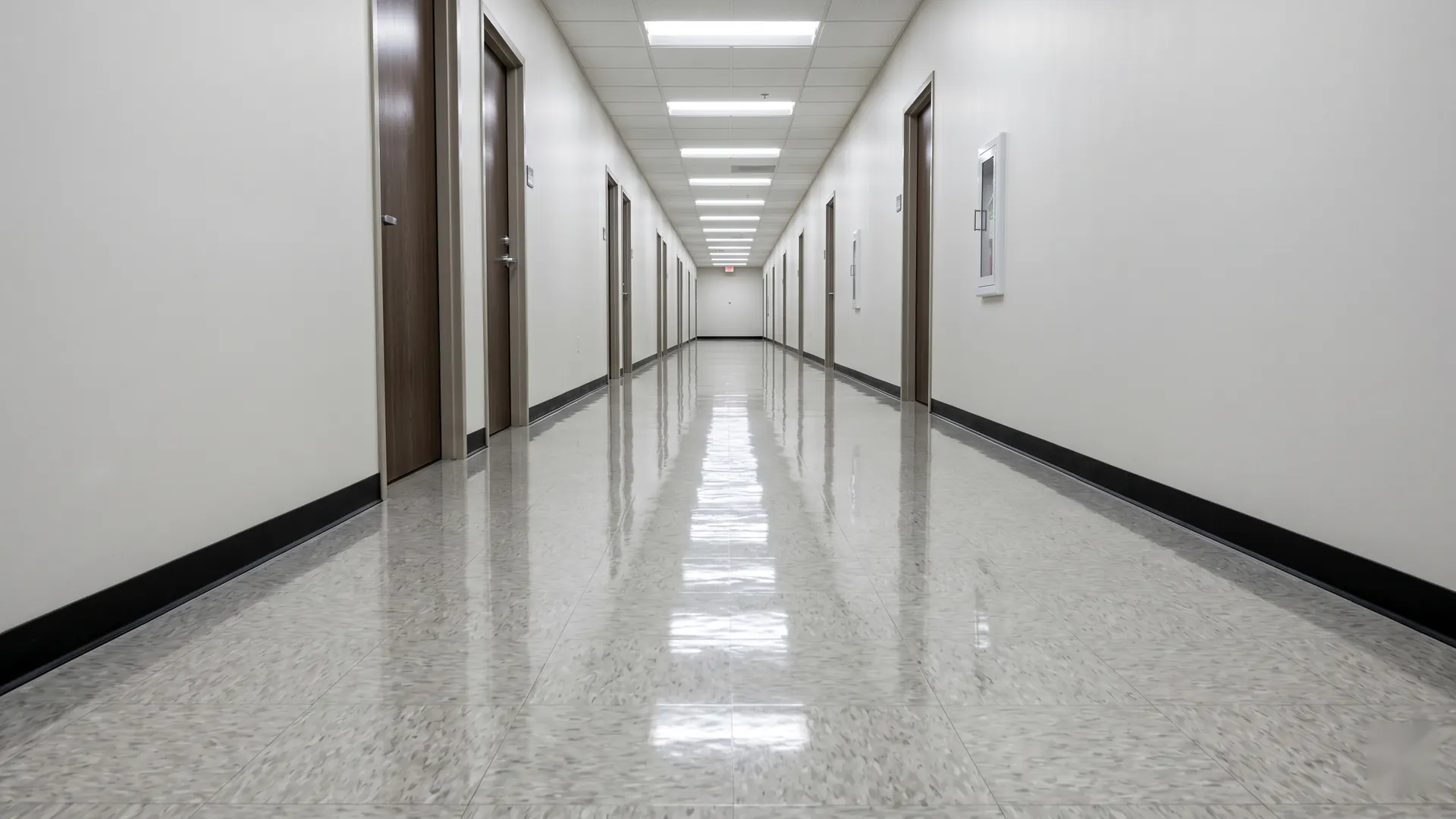
A commercial floor that gets waxed on the right schedule lasts 20 to 30 years. The same floor on the wrong schedule (or no schedule) gets stripped to bare tile and replaced in 8 to 12. The difference is a few hundred dollars a quarter in maintenance versus tens of thousands in floor replacement. This is what a good floor waxing schedule actually looks like for commercial facilities on Long Island.
Why floor waxing matters
Floor wax (or, more accurately, floor finish) is a sacrificial layer. It takes the abuse of foot traffic, dirt, salt, and cleaning chemicals so the floor underneath does not. When the wax is intact, the floor looks great and the tile or plank or sealed concrete underneath is protected. When the wax wears through, every step is one more scratch on the actual floor. By the time the wear shows on the surface, the damage is structural.
Regular waxing on a defined schedule keeps the wax intact, the shine consistent, and the floor itself preserved. This is one of those silent maintenance tasks: when it is done right, no one notices, and the floor lasts decades.
What “schedule” actually means
“Floor waxing schedule” actually covers four different jobs that happen on different cadences. Confusing them is how facilities end up with patchy floors and surprised invoices.
- Daily maintenance. Dust mopping and damp mopping with a neutral pH cleaner. This is part of nightly janitorial service and is what keeps the wax from getting trapped under abrasive grit. Skip it and the wax wears 3x faster.
- Burnishing or buffing. Done weekly or monthly. A high-speed burnisher passes over the wax to re-melt and re-level the surface, restoring the gloss. Burnishing extends the life of a wax application by months. Cheap; high impact.
- Scrub and recoat. Done quarterly to semi-annually. The top layer of wax is gently scrubbed off, and one or two fresh coats are applied. Restores depth and gloss without going down to bare floor. The maintenance cycle most commercial facilities should be running.
- Strip and wax. Done annually to every two years for most commercial floors. Every coat of wax is stripped off down to the floor itself, the floor is cleaned and dried, and four to six fresh coats of finish are applied. The reset that the scrub-and-recoat cycle stretches between.
What schedule does my floor need?
The right schedule depends on traffic volume, type of floor, and how it is used. Some general guidance for commercial Long Island facilities:
Low to moderate traffic (small offices, professional offices, dental, low-traffic retail)
- Daily dust and damp mop (nightly janitorial)
- Burnish monthly
- Scrub and recoat semi-annually
- Full strip and wax annually
Moderate to high traffic (medical waiting rooms, multi-tenant lobbies, mid-sized retail, restaurants front-of-house)
- Daily dust and damp mop (nightly janitorial)
- Burnish twice a month
- Scrub and recoat quarterly
- Full strip and wax annually
Very high traffic (schools, supermarkets, gym lobbies, busy restaurant kitchens, public buildings)
- Daily dust and damp mop, often multiple times per day
- Burnish weekly
- Scrub and recoat every 6 to 8 weeks
- Full strip and wax twice a year, sometimes more
Specialty floors (terrazzo, polished concrete, sealed natural stone)
These do not get traditional wax. They get a different maintenance program: routine cleaning with stone-safe chemistry, periodic re-honing or re-polishing, and re-sealing every two to five years depending on traffic. We cover terrazzo and sealed stone in our floor refinishing service.
Signs you are on the wrong schedule
Three signs your floor maintenance is off:
- Visible traffic patterns. The walking lanes look duller than the edges. This means burnishing has fallen behind. Catch it now and a scrub-and-recoat will restore it. Wait six months and you need a full strip and wax.
- Black scuff marks that will not come up. Scuffs that resist normal scrubbing are sitting in worn-through wax. The floor is no longer protected. Schedule a strip and wax in the next 30 days.
- The floor feels gritty or sticky underfoot. Almost always a chemistry problem: cleaning solutions are leaving residue, or the wrong floor pad is getting used. Worth investigating before it becomes a wear problem.
Common mistakes that wreck a floor waxing schedule
- Skipping daily mopping. Grit is the #1 enemy of wax. One missed nightly clean accelerates wear noticeably.
- Using the wrong chemistry. High-pH cleaners (often sold as “industrial strength”) strip wax slowly with every use. Always use neutral-pH cleaner on waxed floors.
- Burnishing infrequently. Skipping burnishing and going straight to scrub-and-recoat is more expensive and produces a less consistent finish.
- Stripping too aggressively. Stripping is hard on the floor underneath. Doing it more than once or twice a year shortens the floor’s life. The right answer is more frequent scrub-and-recoats, not more frequent stripping.
- Cheap wax. Wax is one of the few places where the budget product is meaningfully worse. Commercial-grade finish (18% to 25% solids) lasts twice as long as the cheap stuff.
Building your schedule with a commercial cleaner
A good commercial cleaning vendor will document your floor maintenance schedule the same way they document everything else: in writing, by zone, with clear cadence. The schedule should specify which weeks the burnish happens, which months the scrub-and-recoat happens, and which week of the year the strip-and-wax happens.
Most facilities benefit from spreading scrub-and-recoats across the calendar so the floor crew is not slammed in one season. Strip-and-wax is typically scheduled during slow business periods (late summer for office, holiday breaks for schools, mid-week overnight for restaurants).
Frequently Asked Questions
How long does floor wax actually last?
A commercial-grade finish, on a moderately trafficked floor, with proper daily maintenance and monthly burnishing, will last 8 to 14 months between strip-and-waxes. Add quarterly scrub-and-recoats and you can stretch this to 18 to 24 months on lower-traffic floors.
What is the difference between waxing and refinishing?
Waxing applies a sacrificial coating of finish on top of an intact floor. Refinishing typically refers to actual restoration of the floor itself (sanding hardwood, re-honing terrazzo, re-sealing stone). Wax is for VCT, vinyl plank, sealed concrete, and certain ceramic tile. Refinishing is for hardwood, terrazzo, marble, and other natural surfaces.
Can I just have my night crew apply wax?
For a routine touch-up coat, sometimes yes. For scrub-and-recoat or full strip-and-wax, no. These jobs require dedicated equipment (auto-scrubbers, high-speed burnishers, high-output ventilation) and trained operators. The labor and equipment cost of doing it wrong is higher than hiring a specialty crew.
How long does the floor have to stay closed?
For burnishing, no closure is required (often done overnight). For scrub-and-recoat, the floor needs 2 to 4 hours of dry time. For full strip-and-wax, expect 6 to 12 hours of closure depending on the number of coats. Most commercial strip-and-waxes are done overnight on a Friday so the floor is fully cured by Monday morning.
Do you handle floor waxing for restaurants and food service?
Yes. Restaurant floor waxing is one of our specialty areas. Kitchens get an oil-and-grease-resistant finish; front-of-house gets a higher-gloss finish. Both are scheduled for after closing so you do not lose service hours. See our restaurant cleaning service.
Need a floor waxing schedule built for your facility?
Request a free site walk from E & J Cleaning. We will look at your floors, recommend the right schedule, and put it in writing with fixed pricing. See our full floor waxing service or call 1-877-443-2635.