
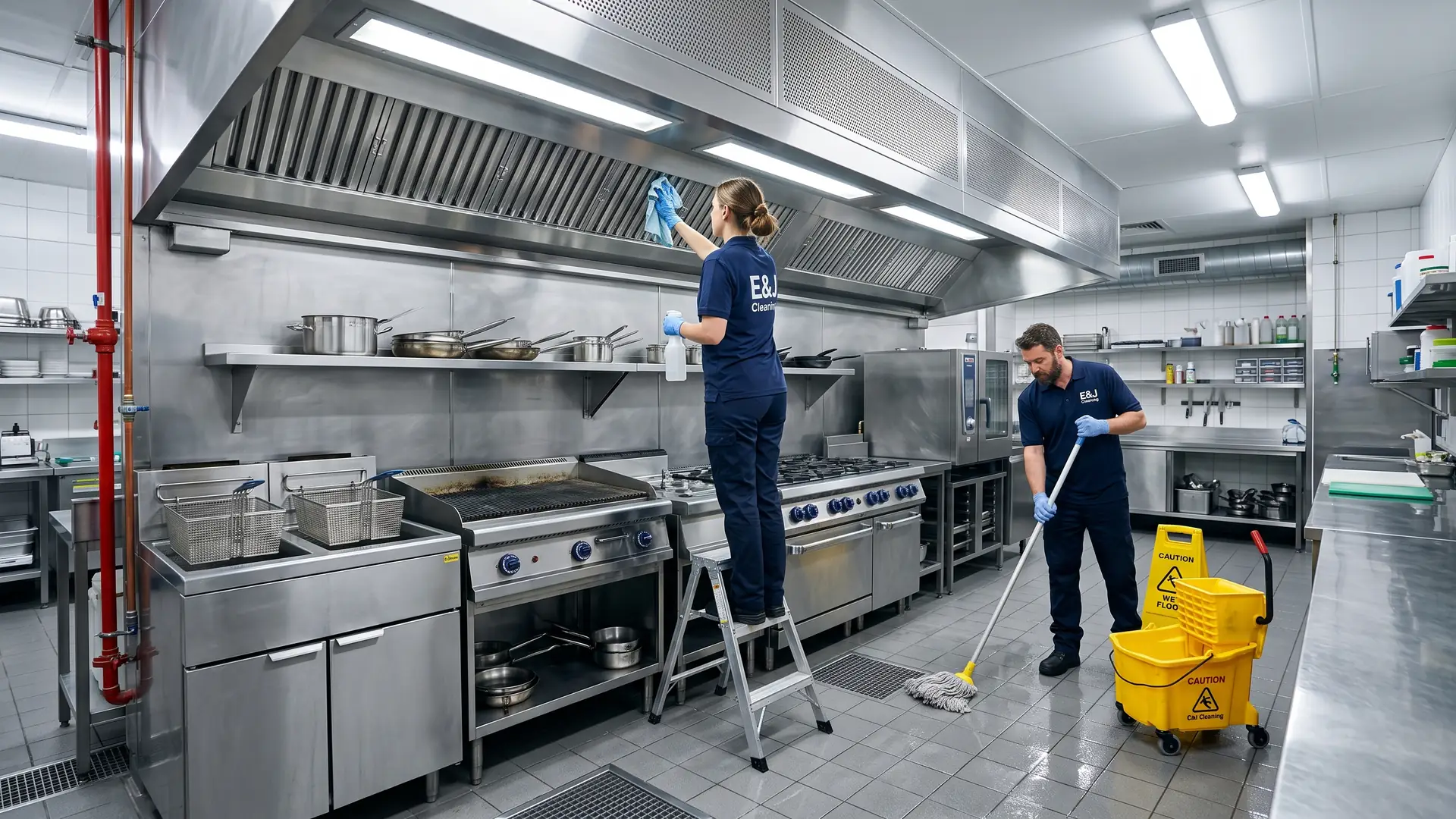
Long Island runs on its restaurants, from the harbor-front kitchens of Port Jefferson to the packed Main Street of Patchogue. Every one of them answers to two authorities at once: the Suffolk County Department of Health, which protects diners, and the fire code, which protects the building. Cleaning is where those two worlds meet. A spotless kitchen is not cosmetic. It is the difference between passing an inspection and posting a closure notice on the door. This guide explains what Suffolk County expects, what NFPA 96 requires of your exhaust system, and how a disciplined cleaning program keeps you off the violation list. For the service itself, see our restaurant cleaning services on Long Island, and for the wider commercial picture, our Long Island commercial cleaning guide.
1. Why restaurant cleaning is different from general commercial cleaning
Office cleaning is about appearance and comfort. Restaurant cleaning is about safety and law. A commercial kitchen produces airborne grease that coats hoods, ducts, and fans; food residue that feeds bacteria and pests; and high heat and moisture that accelerate both. That combination makes a kitchen a public-health site and a fire-risk site at the same time.
The result is a higher standard and a paper trail. Surfaces that touch food must be sanitized, not just wiped. Exhaust systems must be degreased to bare metal on a code-driven schedule. Floors need degreasing rather than mopping, because a greasy kitchen floor is both a slip hazard and a pest attractant. And unlike an office, a restaurant is inspected by the government on a recurring basis, with the results published for the public to see. A general janitorial routine will not pass that bar, which is why food service needs a cleaning program built around compliance.
2. The Suffolk County DOH inspection process, explained
Food service establishments in Suffolk County are inspected by the Department of Health Services, generally at least once a year, with higher-risk and higher-volume operations inspected more often. Frequency is risk-based: a history of violations, prior critical citations, or public complaints all push an establishment up the priority list.
Inspectors focus on the fundamentals: handwashing and hand-sink access, properly sanitized utensils and food-contact surfaces, safe food handling and storage, general cleanliness of surfaces and floors, and pest control. Violations are recorded as either critical (an immediate risk to public health, such as unsafe temperatures or contamination) or general (conditions that could lead to a problem, such as grease buildup or dirty non-contact surfaces). Suffolk County posts inspection results publicly through its online portal, so a bad report is visible to customers as well as regulators. Repeated critical violations across consecutive inspections can trigger enforcement, including a hearing and fines. Our Suffolk DOH inspection prep guide walks through readiness step by step.
3. The most common violations, and how cleaning prevents them
Many of the citations restaurants receive are cleaning-preventable. The recurring offenders are dirty food-contact surfaces (cutting boards, prep tables, slicers), grease accumulation on hoods, filters, walls, and floors, pest activity fed by food debris and harborage, chemicals stored next to food, dirty wiping cloths reused across surfaces, and blocked or dirty handwashing sinks.
A structured cleaning program closes each of these gaps: scheduled sanitizing of every food-contact surface, degreasing of equipment and floors before residue builds, removal of the food debris that draws pests, correct separation and storage of cleaning chemicals, fresh sanitizer for wiping cloths, and hand sinks kept clear and stocked. Temperature control and personal hygiene are on staff, but the environmental violations, which make up a large share of citations, are exactly what a professional program is designed to eliminate.
4. NFPA 96: hood and exhaust cleaning requirements
The grease exhaust system is governed by NFPA 96, the national standard for commercial kitchen ventilation and fire safety. Its cleaning-frequency table sets four tiers based on cooking volume and fuel: monthly for solid-fuel cooking such as wood or charcoal, quarterly for high-volume operations including 24-hour kitchens, charbroiling, and wok cooking, semi-annually for moderate-volume cooking, and annually for low-volume or seasonal operations.
Two rules matter beyond the schedule. Systems must be cleaned to bare metal, with grease fully removed rather than coated over, and if an inspection measures grease depth beyond 0.002 inches (about 50 micrometers), the system must be cleaned immediately regardless of the calendar. The authority having jurisdiction can require more frequent cleaning, and as of the 2025 edition, digital documentation of every cleaning and inspection is expected. Certified hood cleaning is specialized work performed by a licensed vendor, but it lives inside your overall cleaning program, and E & J coordinates kitchen cleaning around that schedule so nothing falls through the cracks.
5. Daily, weekly, monthly, and seasonal cleaning frameworks
A restaurant cleaning program only works when tasks are assigned to the right cadence. Grease and food residue build on a predictable curve, so the schedule should match the risk rather than react to it.
- Daily: sanitize all food-contact surfaces, degrease cooking-line equipment, empty and clean grease receptacles, clean and sanitize restrooms, sweep and degrease kitchen floors, launder or replace wiping cloths.
- Weekly: deep-clean behind and beneath line equipment, delime sinks and dish areas, detail walls and backsplashes, clean walk-in cooler floors and gaskets, and clear floor drains.
- Monthly: deep-clean hood filters, wash walls and ceilings in cooking areas, detail storage shelving, and service refrigeration coils.
- Seasonal or quarterly: full exhaust-system cleaning per NFPA 96, floor stripping and resealing, and a top-to-bottom deep clean ahead of peak periods.
Our seasonal cleaning guide for Suffolk County restaurants maps these cycles to the Long Island calendar, when summer volume and holiday turnover put the most stress on a kitchen.
6. Floor degreasing: the science and the best practice
Kitchen floors are not mopped, they are degreased. Airborne grease settles into the pores and grout lines of quarry tile and concrete, where ordinary mopping only spreads a thin film. That film is a slip hazard for staff, a food source for pests, and a citation waiting to happen. Effective degreasing uses an alkaline, food-safe degreaser with enough dwell time to break the grease bond, agitation to lift it out of the texture and grout, and a clean rinse and extraction so the residue leaves the building rather than drying back onto the floor.
Grout and porous tile need periodic deep restoration beyond the daily routine, which is where dedicated tile and grout cleaning comes in. Getting the floor right also protects your drains: less grease on the floor means less grease washing into the trap.
7. Restroom standards for food service
Restroom condition is one of the first things a health inspector reads as a signal of the whole operation. For food service the bar is higher than a typical commercial restroom: hand sinks must be stocked with soap and single-use towels at all times, fixtures and touch points sanitized frequently through service, floors kept dry and degreased, and ventilation kept clear. A clean, fully stocked restroom is not just a courtesy to guests, it is direct evidence to an inspector that the establishment takes hand hygiene seriously, which is the foundation of everything else on the report.
8. Grease trap and drain coordination
The grease interceptor is the last line between your kitchen and the sewer, and it is a common source of both violations and emergencies. When a trap is overloaded it backs up, forcing a shutdown at the worst possible time. Cleaning and grease management work together: keeping grease off floors and out of dishwater reduces what reaches the trap, floor drains kept clear prevent backups, and the trap itself is pumped and serviced on a schedule by a licensed hauler with the manifests retained for inspection. E & J coordinates the cleaning side of that system and flags problems early, and for an overflow or backup our emergency cleaning team can respond before it closes your doors.
9. Refrigeration and cold-storage cleaning
Walk-in coolers, reach-ins, and prep-top refrigerators are high-risk because they hold ready-to-eat food at the exact temperatures where cross-contamination matters most. Cleaning protocol covers the surfaces and the mechanicals: shelving and interior walls sanitized on a set rotation, door gaskets cleaned and checked (a torn, grimy gasket is both a contamination point and an energy leak), floors and drains kept clear, and condenser and evaporator coils serviced so the unit holds temperature. Spills are addressed immediately rather than left to spread, and cleaning is organized so raw and ready-to-eat storage never share a cloth or a splash. A clean, well-sealed cold line protects both your inspection score and your food cost.
10. Specialty surfaces: stainless steel, tile, and terrazzo
Commercial kitchens are built from materials that each demand their own method. Stainless steel is cleaned with the grain using non-abrasive products, because scratches trap grease and bacteria and scouring pads ruin the finish. Quarry tile and its grout need alkaline degreasing and periodic deep restoration rather than surface mopping. Terrazzo and polished concrete in dining rooms require pH-neutral care to protect the seal and the shine. Matching the product and technique to the surface is what keeps a kitchen both sanitary and presentable, and it is a large part of what separates food-service cleaning from a generic janitorial pass.
11. What to do during a health inspection
An inspection is not a surprise if your program is running. When the inspector arrives, cooperate and stay calm: designate a manager to accompany them, keep your cleaning logs, hood-cleaning certificates, and grease-trap manifests accessible, and correct any easy items on the spot. Documentation is decisive. Being able to show a written cleaning schedule and dated records tells the inspector the establishment is managed, which shapes how borderline items are judged.
If a violation is cited, address it immediately and keep proof of the correction. Most single citations are fixable; the pattern that triggers enforcement is the same issue appearing across consecutive visits. A consistent cleaning program with a paper trail is the surest way to keep general violations from ever becoming critical ones, and to keep critical ones from repeating.
12. Post-event and weekend turnover cleaning
Long Island venues live on weekends, private parties, and seasonal rushes, and those are exactly when kitchens fall behind. High volume lays down grease and debris faster than a mid-shift wipe-down can handle, so heavy nights need a reset afterward rather than before the next service. A scheduled overnight or early-morning turnover, hitting the line, floors, restrooms, and front of house, means the kitchen starts each day at a compliant baseline instead of digging out of the last rush. For banquet halls and event-driven kitchens, that reset is the difference between a clean opening and a scramble.
13. Pest prevention through cleaning
Pests are a food and harborage problem before they are a pest-control problem. Roaches, rodents, and flies follow grease, crumbs, standing water, and clutter, so the most effective pest program starts with cleaning. Degreased floors and equipment remove the food source, cleared drains and dry restrooms remove the water, sealed and sanitized storage removes the harborage, and prompt debris removal denies pests a foothold. Professional pest control is still part of a restaurant plan, but cleaning is what makes it work; without it, no amount of treatment keeps an establishment clear, and pest evidence is one of the fastest routes to a critical violation.
14. Choosing the right cleaning vendor for your restaurant
Food-service cleaning is a specialty, and not every commercial cleaner is equipped for it. Before you hire, ask:
- Do you have restaurant and commercial-kitchen experience specifically, with references?
- Are you insured for food-service work, and can you provide a certificate of insurance?
- Do you use food-safe degreasers and follow surface-specific methods for stainless, tile, and grout?
- Do you provide dated cleaning logs and documentation I can show an inspector?
- Can you schedule around service, including overnight and post-event turnovers?
- Do you coordinate with certified hood cleaning and grease-trap service so nothing is missed?
- Can you respond quickly to an emergency such as a backup or grease spill?
A vendor that answers these confidently is one that understands your kitchen is a compliance environment, not just a floor to mop. E & J built its restaurant cleaning service around exactly these requirements.
15. What restaurant cleaning costs in Suffolk County
There is no flat rate, because cost tracks the work. The biggest drivers are the size of the kitchen and dining room, cooking volume and style (a charbroil-and-wok operation carries far more grease than a sandwich shop), the frequency of service, and the specialty add-ons a kitchen needs, from floor stripping to coordinated hood cleaning. Seasonality matters too, since a summer-peak or event-driven venue may scale service up and down through the year.
The right way to budget is a walkthrough and a scope built around your actual menu, equipment, and volume, rather than a number off a list. When you compare quotes, make sure they cover the same scope and frequency, and that documentation and food-safe methods are included rather than billed as extras. Our commercial cleaning guide explains how to read a quote line by line.
Where Long Island restaurants cluster
Restaurant density on Long Island concentrates in a handful of downtowns, and each has its own rhythm. Patchogue has one of the region’s liveliest dining and nightlife scenes, with heavy weekend and event volume that demands overnight turnovers. Port Jefferson pairs harbor-front restaurants with seasonal ferry and tourist traffic that spikes in summer. Across both, the kitchens that stay ahead of the health department are the ones running a scheduled program rather than cleaning reactively. E & J serves restaurants throughout Suffolk County, matched to each venue’s volume and hours.
Front of house: dining room and bar
Compliance does not stop at the kitchen door. Dining rooms, bars, and service stations are food-contact environments too, and inspectors and guests both notice them. Tables and high-touch surfaces need sanitizing between seatings, bar mats and soda guns need regular cleaning because sugary residue draws pests, and dining-room floors need degreasing where food and drink accumulate. Terrazzo, wood, and polished-concrete floors out front call for gentler, finish-safe care than the kitchen. A dining room that looks and smells clean reinforces the same message the kitchen sends: this is a well-run operation.
Recordkeeping: the paper trail that protects you
In food service, if it is not documented, it did not happen. A defensible program keeps a written cleaning schedule with tasks and frequencies, dated logs showing the work was done, hood-cleaning certificates and service stickers, grease-trap pumping manifests, and safety data sheets for every chemical on site. This paper trail does two things: it keeps the operation honest internally, and it gives an inspector concrete evidence that the establishment is managed rather than merely tidy on the day they happen to visit. When E & J services a kitchen, that documentation is part of the deliverable, not an afterthought.
Warewashing and dish-room sanitation
The dish area is where sanitation is proven or lost. Manual warewashing relies on a three-compartment sink used in the correct order, wash, rinse, then sanitize, with the sanitizer at the right concentration and contact time. Machine warewashing depends on the dish machine reaching the correct wash and rinse temperatures or the proper chemical-sanitizer levels, verified and logged. Beyond the process, the room itself needs attention: splash zones, floor drains, and the underside of tables collect food slurry that turns into odor and pest activity fast. Test strips, thermometers, and a simple log turn warewashing from an assumption into documented proof that dishes leaving the area are actually sanitized.
Allergen cleaning and cross-contact
Cleaning is now a front-line allergen control. Trace residue of peanuts, tree nuts, shellfish, milk, egg, wheat, soy, or sesame left on a surface, a slicer, or a fryer can trigger a serious reaction, and that residue is invisible. Preventing cross-contact means cleaning and sanitizing shared equipment and prep surfaces between tasks, using dedicated tools where possible, and never relying on a quick wipe with a reused cloth to remove an allergen. A cleaning program that treats allergen residue as seriously as bacteria protects guests and shields the restaurant from one of the highest-liability incidents a kitchen can have.
Why NFPA 96 is a fire-safety standard, not just a cleaning rule
Grease in an exhaust system is fuel. When it ignites, a kitchen fire travels up the hood and into the ductwork, where it is hard to reach and burns hot, the class of fire (grease, or K-class) that ordinary extinguishers are not designed for. That is why NFPA 96 requires cleaning to bare metal on a strict schedule rather than a cosmetic wipe: the standard exists to remove the fuel before it accumulates. The compliance stakes are real beyond the fire itself, since insurers and the fire marshal both expect current, documented hood cleaning, and a lapse can affect coverage as well as safety. Keeping the exhaust system clean is one of the highest-leverage risk controls a restaurant has.
Building a cleaning culture with your staff
The best outside cleaning program still depends on what happens between visits. Clean-as-you-go habits on the line, correct sanitizer buckets and fresh cloths, immediate spill response, and end-of-shift closing routines are what hold the baseline that professional deep cleaning resets. The most compliant kitchens pair a scheduled professional program with a simple, trained staff routine and clear ownership of daily tasks. When cleaning is treated as part of the job rather than an afterthought, inspections stop being stressful events and become confirmation of how the kitchen already runs.
Cleaning by restaurant type
No two kitchens carry the same load, and a good program is scoped to the format rather than applied from a template.
- Full-service restaurants: the widest scope, from a high-grease cooking line to a front-of-house dining room and bar, usually needing daily service plus scheduled deep cleans.
- Quick-service and fast-casual: high customer throughput drives dining-room, restroom, and floor demands, while a smaller line still produces fryer and grill grease.
- Bars and nightlife: sugary residue, late hours, and heavy weekend volume make overnight turnovers and pest prevention the priority.
- Cafés and bakeries: flour dust, ovens, and display cases need surface-specific care, with allergen control front and center.
- Commissary and ghost kitchens: shared, high-utilization spaces demand strict scheduling and documentation so no operator inherits another’s mess.
Opening and closing routines
The compliant kitchen is bookended by two routines. The opening pass verifies that the space is at a clean baseline: sanitized surfaces, stocked hand sinks, clear floors, and sanitizer buckets made up fresh for the shift. The closing pass resets everything the day’s service laid down: the cooking line degreased, food-contact surfaces sanitized, floors degreased and drains cleared, trash and grease receptacles emptied, and restrooms detailed. Professional cleaning handles the deep work these routines cannot, but the daily open and close are what keep a kitchen from sliding out of compliance between visits, and a short written checklist is what makes them consistent across shifts and staff.
Seasonal pressure on Long Island kitchens
Long Island’s dining calendar is not flat. Summer brings the heaviest volume to the South Shore and the waterfront villages, holidays load banquet and catering kitchens, and shoulder seasons give operators their only real window for deep cleaning, floor restoration, and a full exhaust service. A program that scales with that calendar, more frequent service and turnovers at peak, deep resets in the quiet stretches, keeps a kitchen compliant year-round instead of falling behind exactly when inspectors and customers are paying the most attention. Our seasonal cleaning guide for Suffolk County restaurants breaks this down by time of year.
Want the numbers? See our analysis of Suffolk County’s most common restaurant cleaning violations, based on 55,566 DOH violation records from 2024.
Restaurant cleaning FAQ
How often does Suffolk County inspect restaurants? Generally at least once a year, and more often for higher-risk or higher-volume kitchens or those with a history of violations or complaints. Results are posted publicly on the county’s online portal.
How often does a kitchen exhaust hood have to be cleaned? NFPA 96 sets the frequency by cooking volume and fuel: monthly for solid fuel, quarterly for high-volume, charbroiling, and wok cooking, semi-annually for moderate volume, and annually for low-volume or seasonal operations. It must be cleaned to bare metal, and immediately if grease exceeds 0.002 inches.
Can professional cleaning really prevent health violations? It prevents most of the environmental ones. Grease buildup, dirty surfaces, pest harborage, and chemical-storage issues are all cleaning-preventable, and they make up a large share of citations. Temperature and staff hygiene stay with your team.
Do you clean during service or after hours? After hours or overnight for the heavy work, so the kitchen starts each day at a compliant baseline. We schedule around your service, including post-event and weekend turnovers.
Are your cleaning products food-safe? Yes. We use food-safe degreasers and sanitizers and surface-specific methods for stainless steel, tile and grout, and terrazzo, and we keep chemicals stored away from food.
Do you handle hood cleaning and grease traps? Certified hood cleaning and grease-trap pumping are specialized, licensed services. We coordinate our cleaning program around those schedules and keep the documentation together so nothing is missed.
What does restaurant cleaning cost on Long Island? It depends on kitchen size, cooking volume, frequency, and specialty needs. The right approach is a walkthrough and a scope built around your menu and equipment. See our commercial cleaning guide for how to compare quotes.
What happens if we fail an inspection or have an emergency? Correct the cited item immediately and keep proof. For urgent problems like a grease-trap backup or a spill, our emergency cleaning team can respond fast.
Which areas do you serve? Restaurants throughout Suffolk County, including the Patchogue and Port Jefferson dining districts.
Talk to E & J about your restaurant
A clean kitchen is a compliant kitchen, and staying ahead of the Suffolk County DOH is far easier with a scheduled program than a scramble before each inspection. E & J Cleaning builds restaurant cleaning around your menu, volume, and hours, with the documentation to back it up. Call 1-877-443-2635 or explore our restaurant cleaning services to get started.