
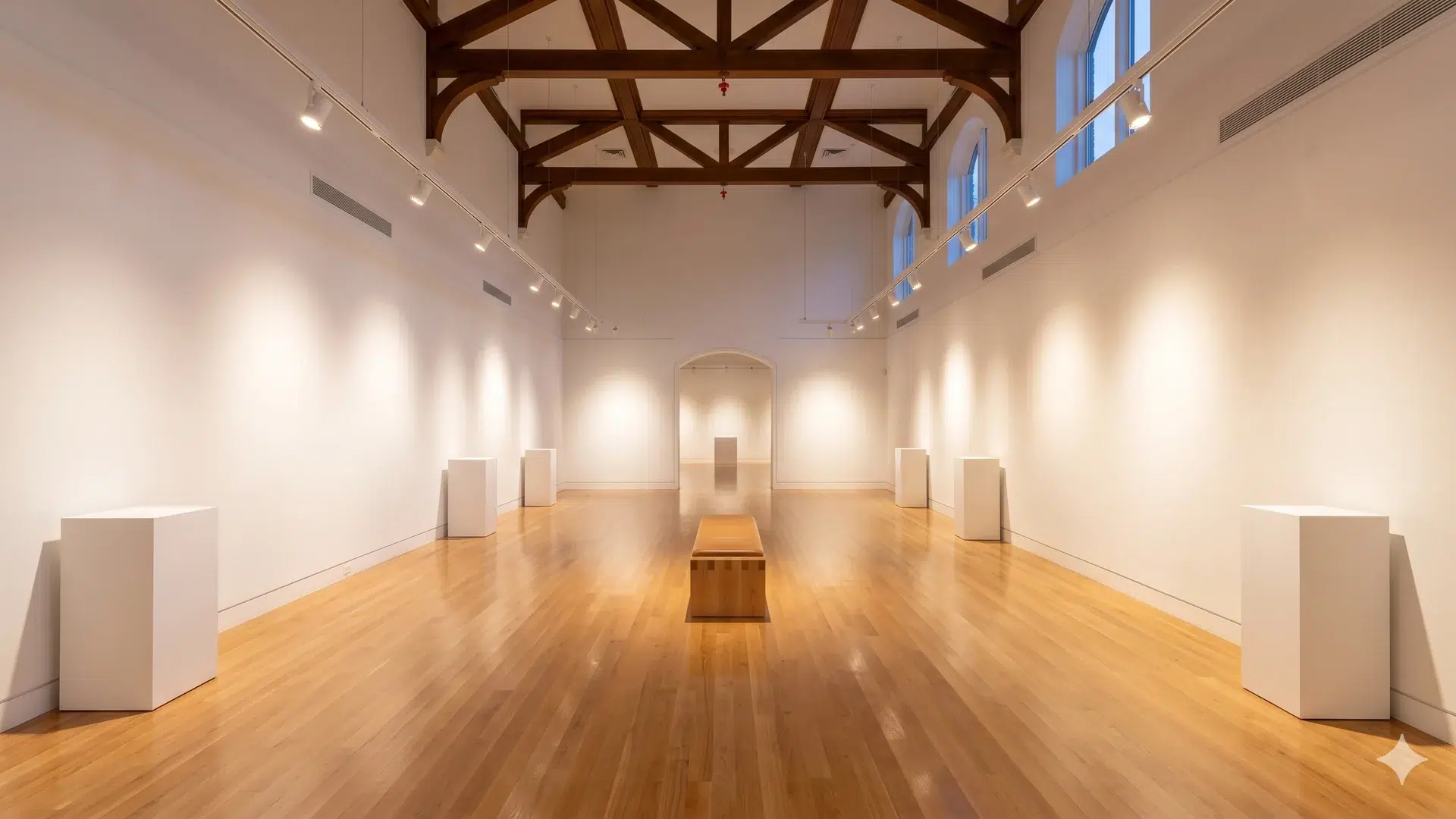
Gallery and Museum Cleaning on Long Island
Galleries and museums need preservation-aware cleaning: no-touch protocols on art and artifacts, low-VOC chemistry, HEPA-filtered vacuums, and schedules that coordinate with registrars and curators. E & J Cleaning works with Long Island galleries, historical societies, and museums on cleaning programs that respect your collection first.
Cleaning a gallery or museum is not cleaning around valuable objects. It is cleaning that protects valuable objects. That means low-dust work methods, HEPA vacuums that do not recirculate particulate, low-VOC chemistry that does not outgas near artwork, and a strict no-touch protocol on anything displayed or stored.
E & J Cleaning has served Long Island galleries, historical societies, university collections, and regional museums. Our crews are trained on preservation-aware protocols. We coordinate with registrars and curators. We document our work, including chemistry used, so your conservator and your insurance company both have a record.
What Our Gallery and Museum Cleaning Includes
- Gallery floors. Low-dust sweeping, HEPA vacuuming, damp-mop with low-VOC chemistry. We work around installed artwork, never touching pedestals, plinths, or cases.
- Visitor circulation areas. Entry, lobby, coat check, gift shop floor, ticketing counter. High-touch disinfection on visitor surfaces.
- Public restrooms. Full disinfection with attention to visitor volume. Low-VOC chemistry.
- Back of house offices and workrooms. Standard cleaning with explicit exclusions around conservation labs, registrar areas, and storage.
- Event cleaning. Opening receptions, member events, fundraisers. We clean pre- and post-event without touching exhibition elements.
- Periodic floor restoration. Strip and refinish for public floors, coordinated around exhibition de-installation and installation windows.
- Preservation-aware documentation. Chemistry list, cleaning log, and incident reporting protocol for any issues observed.
How We Clean a Long Island Gallery or Museum
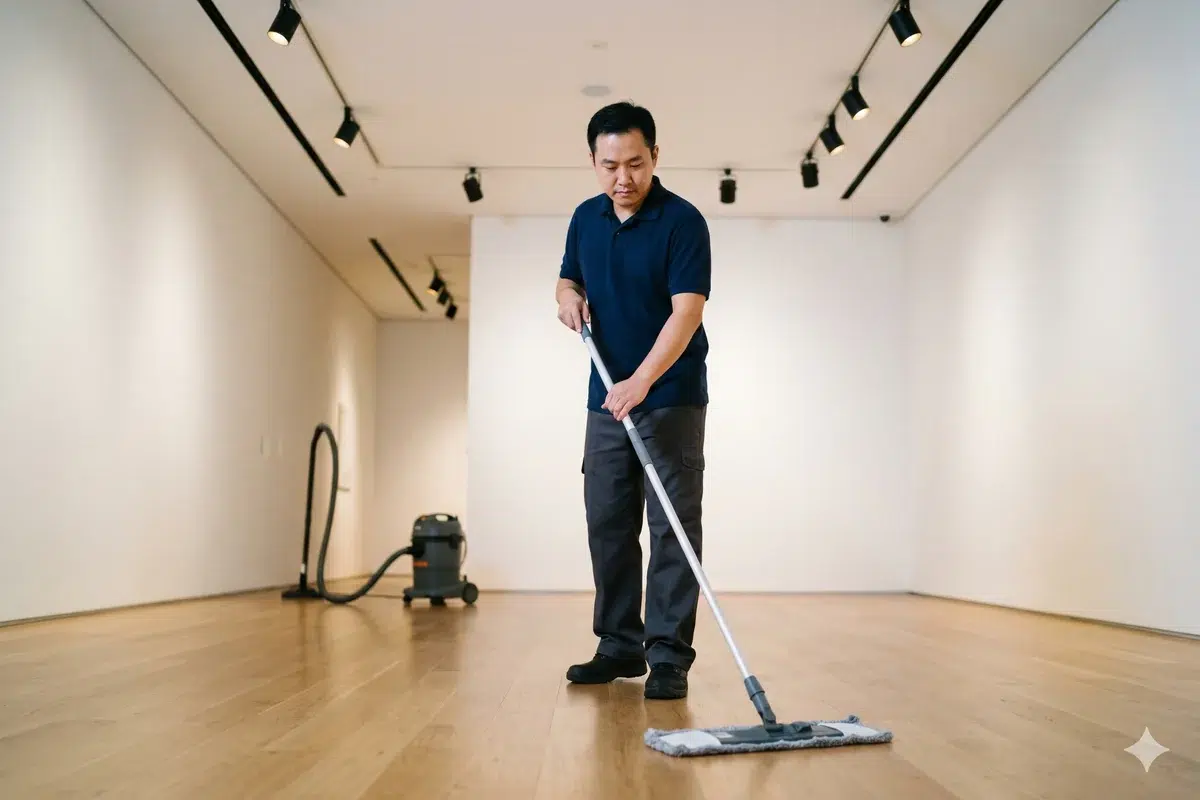
- Walk with the registrar or curator. Galleries, lobby, restrooms, event spaces, offices, and any explicitly excluded areas (storage, conservation).
- Preservation-aware written scope. Chemistry list, no-touch protocol, dust control methods, HEPA vacuum specs. Registrar review and approval.
- Trained crew assignment. Same crew every visit. Rotation minimized. Preservation protocols briefed.
- Schedule around visitor hours. Most gallery cleaning happens before open or after close. Exhibition installation windows get coordinated scheduling.
- Incident reporting. Any observed damage, moisture, pest activity, or environmental issue gets logged and reported to the registrar immediately.
- Quarterly review with curatorial. Regular check-in with registrar to adjust scope as collections, exhibitions, and priorities shift.
Cultural Institutions We Serve
- Commercial art galleries
- Historical societies and historic houses
- Regional and community museums
- University galleries and collections
- Corporate art collections (public-facing)
- Science and nature museums
- Cultural centers
- Artist studios and residency programs
Gallery and Museum Cleaning Across Long Island
Frequently Asked Questions
Do your crews touch artwork?
What chemistry do you use near collections?
Can you coordinate around exhibition install/de-install?
How do you clean galleries and museums without damaging artwork?
Specialized protocols: HEPA-filtered vacuums that capture micro-particulates that could settle on art, microfiber for surfaces, neutral pH cleaners only, no aerosols anywhere near art, hand-held tools instead of automatic equipment in gallery rooms. Crews trained to recognize when to call curatorial staff before cleaning anything that looks unusual.
Will your crews work around active exhibitions and openings?
Yes. We typically clean overnight or before opening hours to avoid visitor disruption. For openings and special events we do pre-event detail clean and post-event reset. Crews are silent and discreet if any during-hours work is needed.
Do you handle the gallery floors, which range from wood to polished concrete to terrazzo?
Yes. Each floor type has specific care protocols. Wood floors get conditioned cleaning that protects finish. Polished concrete needs neutral cleaners that won’t etch. Terrazzo has its own specialty maintenance. We test products on inconspicuous areas before applying to any historic or specialty floor.
What about humidity-sensitive areas where artwork is displayed?
We coordinate with your curatorial team on climate-controlled areas. Cleaning happens in those spaces only when HVAC is in normal mode. We don’t introduce moisture (no wet mopping, no steam) without curator approval. Dry methods only for sensitive spaces.
Can you handle the museum store, cafe, and visitor amenities?
Yes. These are the non-gallery commercial spaces that have standard cleaning needs. We coordinate cleaning schedules so visitor-facing spaces are pristine for opening hours. Restrooms get particular attention because they’re a visitor experience pain point.
Do you have crews trained in respectful handling around historic interiors?
Yes. Crews assigned to gallery and museum work understand: no touching anything beyond agreed cleaning zones, no photography ever, modest behavior in sensitive spaces, and immediate communication when anything looks damaged or out of place. We treat your space as the cultural asset it is.
Are you familiar with museum facility maintenance standards?
Yes. We’ve worked with Long Island galleries, regional museums, and historic houses. We understand standard AAM (American Alliance of Museums) facilities guidance and can comply with your specific protocols. Documentation provided for accreditation audits if requested.
Need Cleaning That Protects Your Collection?
Request a walk with your registrar or operations lead.