
Auto Dealership Cleaning: Showroom Glass, Service Bays, and First Impressions

Auto dealerships have a cleaning problem that other commercial spaces do not: every surface either sells the car or undermines the sale. Smudged showroom glass reads as a tired brand. A dusty hood on the display car reads as an unsold inventory unit. A grimy customer waiting room makes service customers question whether the dealership cares about them. The cleaning standard at a dealership is a sales standard, not just a hygiene standard.
This guide walks through what dealership cleaning actually requires, zone by zone, and the operational realities of running it on Long Island. Written for dealership GMs, fixed operations directors, and facility managers who are evaluating cleaning vendors or refining an existing program.
The four zones in an auto dealership
Dealerships break down into four cleaning zones with distinct requirements:
Showroom. High-glass, high-shine. Display vehicles, customer flow, sales offices. Standards driven by automotive brand standards (Ford, BMW, Toyota all have facility standards for franchised dealers) and by competitive positioning. Daily cleaning during business hours and overnight reset.
Service department. Customer drop-off area, service write-up desks, customer waiting room, restrooms, parts counter. Cleaner than the back, customer-facing. Service write-up area is the bridge between sales and service; it sees both groups.
Service bays and shop floor. Industrial cleaning. Oil, grease, coolant, brake dust, tire residue. Not customer-facing. Standards driven by technician productivity, safety, and brand certification audits.
Back of house. Parts warehouse, technician break room, manager offices, F&I area. Mix of standard office cleaning and industrial.
An effective dealership cleaning program treats each zone differently. A program that runs the same scope across all four either over-cleans the back or under-cleans the front.
Showroom cleaning: the highest-stakes zone
Showroom cleaning is what customers see when they walk in. The cleaning items that matter most:
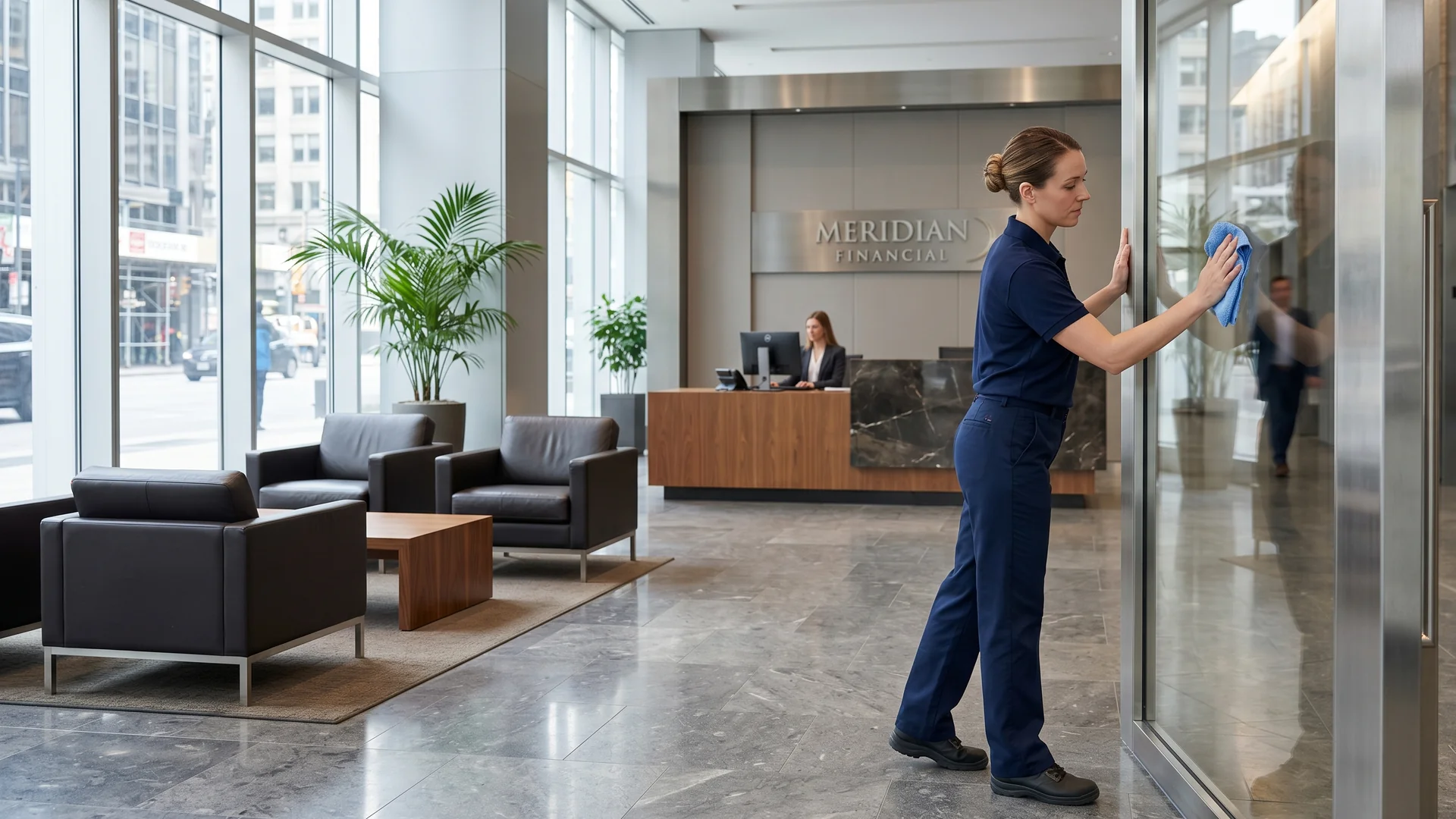
Exterior glass. The front-facade glass of a typical Long Island dealership is dramatic and prominent. Streaks, water spots, and bird droppings are visible from the street. Weekly cleaning of exterior glass at minimum; monthly squeegee with proper window cleaner. Interior glass on showroom doors and partition walls cleaned daily.
Showroom floor. Usually polished concrete, terrazzo, or porcelain tile. Daily dust mop and damp mop. Periodic burnishing or polishing to maintain shine. Heel marks and tire marks from display vehicles need attention.
Display vehicle dusting. Display vehicles accumulate dust on hoods, trunks, and dashboards. Daily light dusting with a vehicle-safe microfiber. NOT polishing or detailing (that is the porter or detail department’s scope), just dust removal so vehicles look ready to sell.
Customer entry mats. Heavy traffic at entry doors deposits salt, sand, and dirt that tracks across the showroom floor. Walk-off mats at minimum 12-15 feet deep, rotated and cleaned regularly.
Sales office cubicles and offices. Standard office cleaning – trash, dust, vacuum, surface wipe. Glass partitions and doors detailed.
Showroom restrooms. Customer-facing, held to a high standard. Multiple checks per day if traffic warrants.
Service write-up and customer waiting
The service customer is paying attention. They are bored, anxious about their bill, and looking around. The waiting room cleanliness is the only signal of dealership quality they have during the wait.
Cleaning priorities in service customer-facing areas:
- Service write-up area. Counters wiped throughout the day. Floor swept and mopped. Trash pulled.
- Customer waiting room. Chairs and tables wiped, magazines stacked, coffee station maintained (this is a porter task that pays off massively in customer experience).
- Coffee station. Empty, clean, restocked. Spills wiped immediately. Crumbs swept. The condition of the coffee station tracks closely with customer perception.
- Restrooms. Multiple checks per day. Stocked, clean, no smell. A service department restroom that fails is a 1-star CSI score.
- Children’s play area (if present). Toys wiped daily, floor sanitized.
- Coffee table magazines and brochures. Refreshed, not allowed to look tired.
- TV remote, water dispenser, vending machine. Wiped, restocked, operational.
The customer is sitting in the waiting room for an oil change for 45 minutes. They watch every cleaning failure during that time.
Service bays: industrial cleaning territory
Service bays are not standard commercial cleaning. The mess is industrial: motor oil, transmission fluid, coolant, grease, brake dust, tire marks. The cleaning approach is different:
- Daily bay floor sweep. Remove debris, parts, packaging.
- Weekly bay floor mop with degreaser. Standard mop and bucket does not handle bay floor soil. Need an industrial degreaser and either a deck brush or auto-scrubber.
- Periodic bay floor scrub. Monthly or quarterly auto-scrubber pass with appropriate chemistry. Restores floor color and traction.
- Drain cleaning and grate maintenance. Service bay drains accumulate gunk and need periodic cleaning to prevent backflow.
- Tool bench and equipment surrounds. Wiped, organized. The technicians do most of this, but the cleaning crew can maintain the periphery.
- Tire and battery storage areas. Periodic vacuum and wipe; these areas accumulate dust and shedding rubber.
- Customer pickup door area. The transition from service bay to customer pickup needs cleaning attention because customers see it when they retrieve their vehicle.
Most cleaning companies that handle dealerships either have an industrial cleaning division or partner with one for the bay-floor scope. A standard commercial cleaning crew is not equipped for service bay floor work.
Brand standards and certification audits
Franchised dealerships have manufacturer facility standards. Ford has them. BMW has them. Toyota has them. Each manufacturer audits its dealerships periodically and cleanliness is part of the audit. Failing the audit can affect dealer rating, allocation, and even franchise standing in extreme cases.
The audit items typically include:
- Exterior glass condition
- Showroom floor condition (no heel marks, no scratches)
- Display vehicle cleanliness
- Service customer area condition
- Restroom condition (with specific stocking and cleanliness requirements)
- Customer parking lot condition
- Service bay floor condition and organization
- Signage and branding compliance
A cleaning program that meets brand standards is different from a cleaning program that meets generic commercial standards. The brand audit is more specific and less forgiving. If you are a franchised dealer, share the brand standards document with your cleaning company and have them quote against it.
Long Island-specific dealership realities
Long Island dealerships face a few regional factors that affect cleaning:
- Salt and sand season. November through March, customer foot traffic brings in salt and sand. Walk-off matting and floor cleaning frequency need to scale up. Damage to floor finish from salt is real if not addressed.
- Pollen season. April-May and August-September deposit yellow pollen on exterior glass and exterior vehicles. Daily exterior wipe-down during peak pollen is justified.
- Coastal humidity. Affects restroom mildew control and showroom glass spotting. Cleaning chemistry and frequency need to compensate.
- Storm response. Hurricane and nor’easter events can leave a dealership with debris, water intrusion, or displaced inventory. A cleaning company with storm-response capability is worth having pre-vetted.
- Customer demographic. Many Long Island dealerships serve a customer base with high facility expectations. Cleaning standards that work in a lower-cost market may not meet expectations here.
What to ask cleaning companies during the dealership bid
- How many auto dealerships do you currently service on Long Island?
- Do you handle service bay floor scope, or do you subcontract industrial cleaning?
- What is your scope for exterior glass cleaning?
- How often do you cycle through display vehicles for dusting?
- What is your service customer waiting room maintenance schedule?
- Can you meet our manufacturer’s facility audit standards? (Share the doc)
- What is your day porter availability for sales floor and service customer areas?
- How do you handle salt and sand season?
E & J Cleaning has worked with Long Island auto dealerships across multiple brands. Showroom glass, display vehicle dusting, service customer area, restroom maintenance, service bay floor scrubbing, and brand audit support all in scope. Visit our auto dealership cleaning page or call 1-877-443-2635 to discuss your dealership’s specific needs.
Frequently Asked Questions
How often should auto dealership showroom glass be cleaned?
Exterior facade glass: weekly minimum, with periodic squeegee. Interior glass partitions and doors: daily. During pollen season (April-May, August-September) and salt season (winter), exterior frequency scales up.
Do display vehicles need to be cleaned daily?
Light dusting daily for hoods, trunks, dashboards with vehicle-safe microfiber. Not polishing or detailing (porter or detail department scope). The goal is removing visible dust accumulation.
Can a standard cleaning company handle dealership service bays?
Not usually. Service bay floors need industrial degreaser, deck brushes or auto-scrubbers, and an understanding of automotive shop chemistry. Most dealership cleaning programs either have an industrial division or partner with one for bay-floor scope.
What do manufacturer facility audits typically check for cleaning?
Exterior glass, showroom floor condition, display vehicle cleanliness, service customer areas, restroom stocking and cleanliness, customer parking lot, service bay floor and organization. Share the brand standards document with cleaning vendors during the bid.
Auto Dealership Cleaning That Meets Brand Audit?
Free walk. Showroom-ready every morning.