
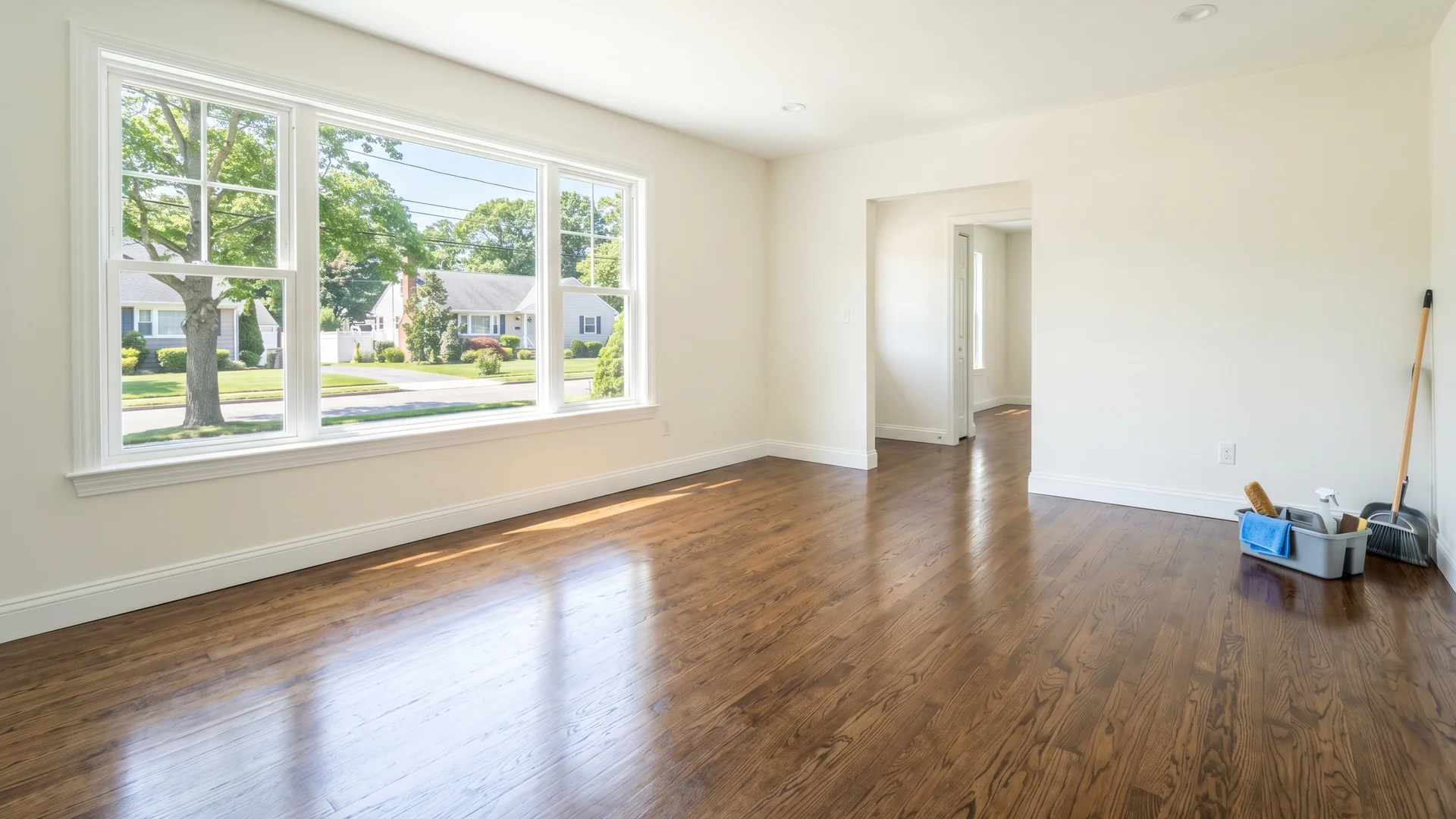
Residential property managers carry a different cleaning relationship than individual renters or homeowners. The work is recurring, the timeline is fixed by lease changeovers, and the standard is documented and repeatable. A turnover that is two hours late on a Saturday cascades into a leasing problem Monday morning. A turnover that misses the checklist becomes a complaint from the next tenant a week later. The work is not glamorous, but it is the difference between properties that re-rent fast and properties that sit.
This guide is for Long Island residential property managers building or refining a move-out turnover cleaning program. What to standardize, how to document it, and how to set up cleaning vendor relationships that scale across a portfolio.
What makes property management cleaning different
Three factors set property management apart from one-off residential cleaning:
Volume and predictability. A 40-unit portfolio sees turnovers regularly throughout the year, with predictable surges at month-end, lease anniversaries, and the September 1 Long Island lease changeover wave. Volume gives you negotiating leverage; predictability lets cleaning crews plan ahead.
Documented standards. Every unit gets the same checklist. The next tenant has a known starting condition. Owners or REITs auditing the portfolio can verify standards are met.
Recurring relationship. Same cleaning company, same crew (ideally), same workflow. Onboarding is one-time; execution is repeatable.
The portfolio cleaning relationship is more like a B2B service contract than a residential customer relationship. Pricing reflects this. Scope reflects this. Expectations reflect this.
The standardized turnover checklist
The cleaning checklist for a property management turnover should cover every item that the next tenant will inspect, plus the items that protect the unit’s condition for the long term. A workable checklist:
Kitchen (60-90 minutes).
- Oven interior including door glass, racks, broiler pan
- Stovetop, burner grates, drip pans, hood filter
- Refrigerator interior, exterior, door seals, top, behind
- Dishwasher interior, filter, door seal
- Microwave interior, exterior, top vent
- Sink, faucet, disposal, under-sink cabinet
- All cabinets and drawers (interior and exterior)
- Counters, backsplash, soap dispenser area
- Floor swept then mopped including behind appliances
Bathrooms (45-60 minutes per bathroom).
- Toilet inside and out, base, behind
- Tub or shower, grout, soap scum, shower head descale
- Shower glass door and track
- Sink, faucet, vanity top, mirror
- Vanity cabinet interior and exterior
- Exhaust fan cover removed, dust vacuumed, wiped
- Medicine cabinet interior and shelves
- Towel bars, toilet paper holder
- Floor mopped including behind toilet
Bedrooms and closets (30-45 minutes per bedroom).
- Closet interior (floor, shelves, rod, walls)
- Baseboards wiped
- Window sills and tracks
- Inside window glass
- Light fixtures and ceiling fan blades
- Switch plates and outlet covers
- HVAC vents and returns dusted
- Floors vacuumed and mopped
Living areas and common areas (30-60 minutes).
- All baseboards
- Window sills, tracks, and inside glass
- Door frames and door fronts (both sides)
- Light fixtures and fan blades
- Switch plates and outlet covers
- HVAC vents and returns
- Floors vacuumed and mopped (or carpet extracted if scheduled)
Final pass and documentation (15-30 minutes).
- HVAC filter replaced
- Smoke and CO detectors tested, batteries replaced
- All light bulbs operational (replace burnouts)
- Trash and recycling bins emptied and rinsed
- Photo documentation of every cleaned room
- Final walk with property manager or photo signoff
For a 2-bedroom 1.5-bath unit, plan on 6-9 hours total with a 2-person crew. For a 3-bedroom 2-bath unit, 9-12 hours. For larger units or condition-heavy turnovers, longer.
What gets documented
Documentation is what separates a property management turnover program from ad-hoc cleaning. Every turnover produces a paper or digital record:
- Turnover date and unit address. Logged at the start.
- Crew members on site. Names of who performed the work.
- Start and end time. Confirms scheduling and labor hours.
- Checklist completion. Each line item checked off as done.
- Photo set. Every cleaned room photographed, timestamped, stored.
- Damage or condition notes. Anything found beyond standard cleaning (stains the cleaner could not remove, damage that needs repair, items left behind by prior tenant).
- Items not on checklist that the manager should know about. Burned-out bulbs that need replacement, HVAC filter condition, leaks, broken hardware, anything visible during the deep clean.
- Sign-off. Either the property manager signs the checklist or the cleaner submits via app for digital acceptance.
For larger property management companies, this documentation feeds into the unit’s history file. Recurring patterns (same unit with chronic mildew issues, same building with HVAC complaints) surface over time and can drive maintenance decisions.
The September 1 Long Island lease wave
September 1 is the biggest residential turnover day on Long Island. College-area properties especially see concentrated lease changeovers; many residential leases default to September 1 start dates. Cleaning crews are at peak demand and reserve capacity is scarce. Practical preparation:
- Lock in cleaning crews by mid-July. Your cleaner needs to know which units, which dates, which sequencing. They are juggling multiple property management accounts.
- Stagger turnovers where possible. If you can move some August 28-31 move-outs and September 2-5 move-ins, you spread the load.
- Pre-position supplies. Toilet paper, paper towels, light bulbs, HVAC filters, batteries all bulk-purchased and stored in a central location accessible to cleaners.
- Hold backup crew slots. Reserve at least one backup cleaning crew for the September 1-3 window in case something fails.
- Communicate with both outgoing and incoming tenants. Pickup keys, drop off keys, and move-out walk-through times confirmed in writing.
Pricing models for property management cleaning
Three common pricing models:
Per-unit flat rate. Cleaning company quotes a flat price per unit by size (studio, 1BR, 2BR, 3BR). Easy budgeting. Risk: condition variance can leave the cleaner unhappy with the flat price on heavy units.
Per-hour with caps. Cleaning company bills time, capped at a per-unit ceiling. Honest model for portfolios with variable condition. Requires good time tracking.
Monthly retainer. Fixed monthly fee that covers expected turnover volume across the portfolio. Best for predictable portfolios with steady turnover rates. Overage pricing for surge months.
For most Long Island property management portfolios, the per-unit flat rate model with size brackets is the easiest. Adjust occasionally for heavy-condition units.
The vendor relationship that works
Property management cleaning relationships that last share a few traits:
- Single point of contact at the cleaning company. One account manager who knows the portfolio.
- Single point of contact at the property management company. One person at the PM end who owns the cleaning relationship.
- Standardized scope and checklist. Documented, shared, not reinvented per unit.
- Photo documentation and digital records. Searchable history of every turnover.
- Monthly invoice with itemization by unit. Easy reconciliation against the property management software.
- Quarterly review meetings. Walk through what is working, what is not, what to adjust.
- Reasonable price escalation. Annual increases tied to labor cost inflation, not opportunistic.
- Backup capacity disclosed. Cleaning company tells you their plan for sick days, peak surges, and crew turnover.
What to ask cleaning vendors during the property management bid
- How many residential property management portfolios do you currently service on Long Island?
- What is your standard turnover checklist? (Get a copy)
- How do you handle photo documentation and digital records?
- What is your peak-season capacity, especially for September 1 lease wave?
- Can you provide one invoice per month covering all units, itemized?
- What is your pricing model and how does it handle condition variance?
- Are your crews W-2 employees or subcontracted?
- What is your communication channel for issue escalation?
- Can you provide references from current property management customers?
E & J Cleaning works with Long Island residential property management companies on standardized turnover programs: documented checklist, photo records, single monthly invoice, September 1 peak coverage. Visit our move-in/move-out service page or call 1-877-443-2635 to discuss your portfolio.
Frequently Asked Questions
How long should a 2-bedroom property management turnover clean take?
6-9 hours with a 2-person crew for a 2BR 1.5BA unit. 9-12 hours for 3BR 2BA. Longer for condition-heavy units or larger floor plans. Plan staffing and pricing around this baseline.
What documentation should every property management turnover produce?
Date, unit, crew, start/end time, checklist completion, photos of every cleaned room, condition and damage notes, items needing PM attention, and sign-off (digital or paper).
When should we lock in cleaning crews for September 1 Long Island lease turnovers?
Mid-July at the latest. Crews are at peak demand and reserve capacity is scarce. Late confirmations get pushed to less-experienced crews or fail to schedule entirely.
What pricing model works best for property management cleaning?
Per-unit flat rate by size bracket is the easiest for most Long Island PM portfolios. Per-hour with caps for variable-condition portfolios. Monthly retainer for very predictable high-volume operations.
Property Manager With Turnover Volume?
Free portfolio walk. Single monthly invoice.