
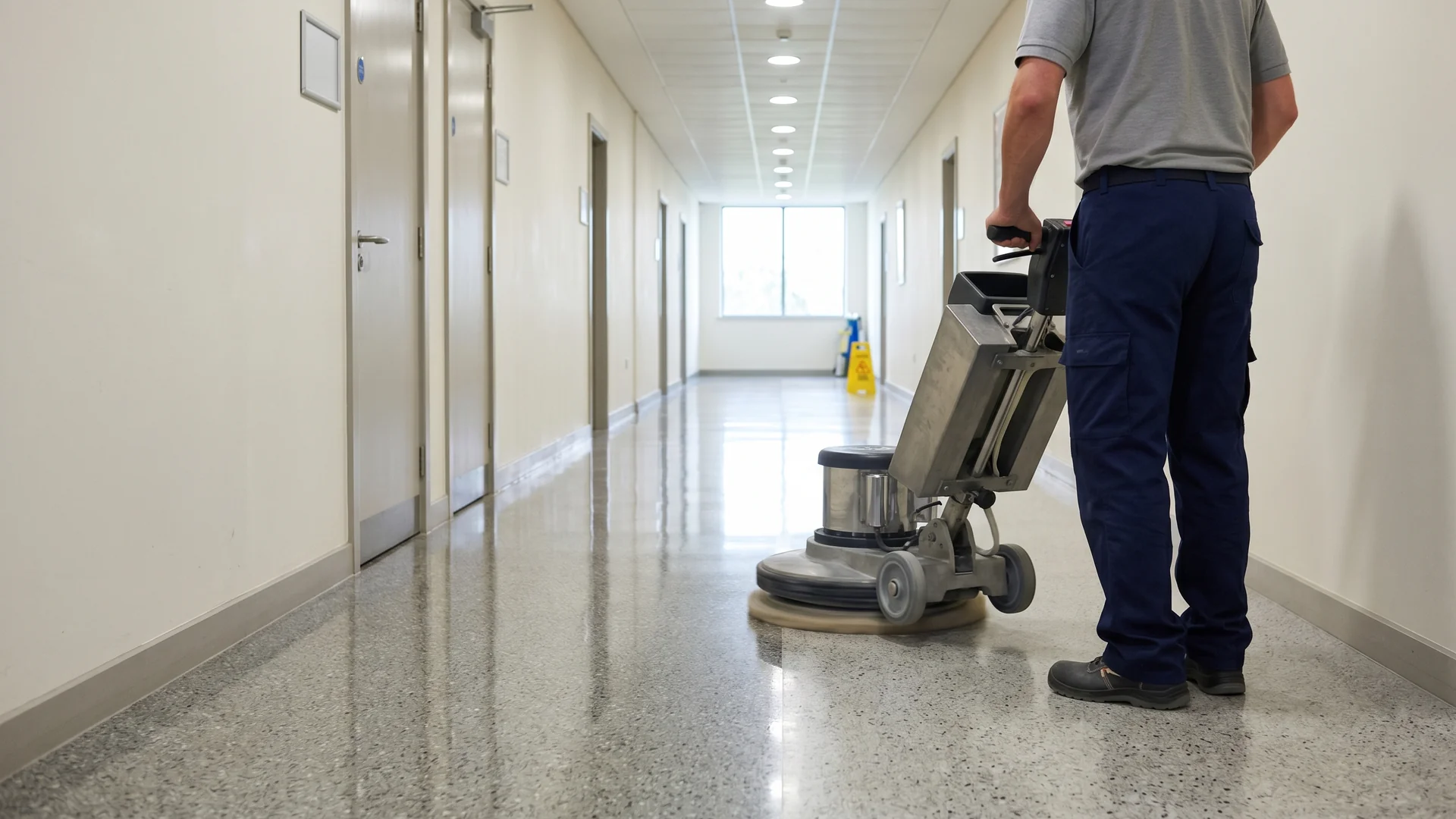
Natural stone floors are an investment. Travertine, marble, limestone, slate, and granite all run several times the installed cost of ceramic tile and add architectural weight to a space. They also degrade differently than ceramic. Acidic spills etch them. Foot traffic dulls the polished surface. Improper cleaning chemistry can permanently damage them. By year five or ten, a stone floor that started gorgeous often looks tired, scratched, etched, or hazed – and many facility managers and homeowners assume replacement is the only option.
It usually is not. Professional stone floor restoration can return a tired stone floor to near-new condition at a fraction of replacement cost. This guide explains how it works, what stone responds well, and what to look for in a restoration contractor on Long Island.
How natural stone degrades
Different stones have different vulnerabilities:
Marble. Calcium carbonate base. Polished marble is highly reflective and beautiful but acid-sensitive (citrus, vinegar, certain cleaners etch the surface). Foot traffic dulls the polish over time. Scratches show on dark marbles.
Travertine. Limestone base, often with natural holes filled with grout-like material. Polished or honed finish. Acid-sensitive. Holes can re-open as fill material wears.
Limestone. Calcium carbonate base, softer than marble. Honed or matte finish typical. Acid-sensitive. Scratches and wear show.
Slate. Mineral mix, more impact-resistant than marble. Surface can flake or delaminate over time. Natural finish ranges from rough to honed.
Granite. Crystalline mineral mix. Much harder than marble, acid-resistant in most cases. Polished granite is durable but can develop scratches and stain in pores over years.
The most common degradation patterns:
- Etch marks. Acidic spills (drinks, foods, cleaning products) chemically etch the stone surface. Visible as dull spots on polished stone, surface texture change on honed stone. Permanent without restoration.
- Traffic wear and dulling. Polished surfaces dull from foot traffic and abrasion over months to years. Visible as loss of reflection, often in walkway patterns.
- Stains. Penetrating stains from oil, wine, coffee, ink, or biological material that absorb into the porous stone.
- Scratches. Visible on darker stones and polished finishes.
- Hazing. Soap residue, wax buildup, or improper sealant accumulating on the surface.
- Lippage. Tiles installed at slightly different heights produce edges that wear visibly over time.
- Cracks and chips. Impact damage. Sometimes repairable, sometimes requires tile replacement.
The four steps of stone restoration
Step 1: Diamond grinding (if needed). For deeply etched, scratched, or worn stone, diamond-impregnated grinding pads remove a thin layer of stone to expose fresh material beneath. This is the most aggressive step and is what separates restoration from cleaning. Used for stone in poor condition.
Step 2: Honing. Progressively finer abrasive pads bring the surface to the desired finish (matte, honed, or polished). Honing is the controlled smoothing of the stone that removes minor scratches and prepares for polishing.
Step 3: Polishing. Final polish with very fine pads and polishing compounds brings the stone to high reflectivity. For honed finishes, this step is omitted or stopped at a matte finish.
Step 4: Sealing. Penetrating sealer (impregnator) is applied to fill the stone pores and resist future staining and etching. Modern sealers last 1-5 years depending on traffic and stone porosity.
Not every restoration requires all four steps. Light maintenance restorations skip diamond grinding entirely and do just polish and seal. Heavy restorations of badly damaged stone use all four. Cost scales accordingly.
Levels of stone restoration
Maintenance polish. Light buff and reseal of polished stone in reasonable condition. Restores reflectivity, addresses minor dulling. Quick turnaround. Lowest cost.
Honing and re-polishing. Addresses moderate wear, light scratches, surface etching. Removes a very thin surface layer and brings the stone back to its original finish.
Full restoration. Heavy scratches, deep etching, lippage, severe wear. Diamond grinding through full hone, polish, and seal. Highest cost but produces near-new appearance.
Etch removal. Spot treatment for individual etch marks without full restoration of the entire floor. For isolated damage in otherwise good stone.
Stain removal. Poulticing treatments to draw out penetrating stains from porous stone. Sometimes effective, sometimes requires accepting the stain or replacing the stone.
Cost comparison: restoration vs replacement
Natural stone replacement runs $20-100+ per square foot installed depending on the stone, with high-end marble and unusual stones at the top of that range. Restoration typically runs a small fraction of that, depending on condition and stone type. For most properties with stone floors showing their age, restoration is dramatically cheaper than replacement and produces a result that is much closer to “new” than to “patched.”
The exceptions where replacement makes sense:
- Stone is structurally damaged (cracks, lifted tiles, hollow spots)
- The stone design is dated and the property would benefit from a different look
- Substrate problems (uneven floor, settling) need to be addressed
- The stone is so degraded that even full restoration cannot produce satisfactory results
For most well-maintained Long Island stone floors that are simply showing wear, restoration is the right call.
What restoration cannot fix
Honest limitations:
- Penetrating stains in highly absorbent stone. Some oil and biological stains have penetrated deep enough that grinding cannot reach the bottom of them. May leave a visible mark.
- Severe lippage. Tiles installed at very different heights cannot be ground flat without removing too much stone. Tile replacement is the answer.
- Structural cracks. Stones cracked through the body of the tile need replacement.
- Bad installation. If tiles are loose, popping up, or the underlayment is failing, restoration of the surface does not fix the underlying problem.
- Color changes. Restoration brings the stone back to its original color; it cannot change the color of the stone to something else.
How often natural stone should be restored on Long Island
Frequency depends on traffic, stone type, and maintenance quality:
- Commercial lobby with stone: Light maintenance polish every 12-18 months, full restoration every 5-7 years.
- High-traffic commercial floor (retail, restaurant): Maintenance every 6-12 months, full restoration every 3-5 years.
- Residential stone floor (low traffic): Maintenance every 2-3 years, full restoration every 7-10 years.
- Residential stone in kitchen or entry (high traffic, exposure): Maintenance annually, full restoration every 4-6 years.
- Hospitality and resort stone: Maintenance every 6 months, full restoration every 3-5 years.
Stone that is sealed properly and cleaned with pH-neutral products holds up much longer between restorations than stone that gets aggressive cleaning chemistry. The maintenance cleaning between restorations matters a lot.
Daily care that extends the time between restorations
- Use pH-neutral stone cleaners. No vinegar, no acidic cleaners, no bleach.
- Wipe spills immediately, especially acidic spills (juice, wine, coffee, vinegar-based foods).
- Use walk-off matting at entries to capture grit before it gets dragged across the floor.
- Dust mop daily before damp mopping. Grit ground into the floor scratches it.
- Avoid moving furniture across stone without protection.
- Reseal on the schedule the original installer recommended (typically annually for high-use, every 2-3 years for residential).
Selecting a stone restoration contractor on Long Island
Stone restoration is specialized. Standard floor cleaning companies often do not have the equipment or training. Selection criteria:
- Diamond grinding equipment (not just buffing pads)
- Demonstrated portfolio of stone restoration work, ideally with before/after photos of similar stones
- Knowledge of different stone types (marble, travertine, limestone, slate, granite each handled differently)
- Sealer selection and application expertise
- Willingness to do a small test patch before committing to the full floor
- Insurance specifically covering stone work (some general liability policies exclude it)
- References from completed projects
E & J Cleaning provides stone floor restoration on Long Island for marble, travertine, limestone, slate, and granite. Diamond grinding, honing, polishing, and sealing. Commercial lobby, hotel and hospitality, residential. Visit our floor services page or call 1-877-443-2635 for a stone floor evaluation.
Frequently Asked Questions
Can a damaged marble floor be restored without replacement?
Yes in most cases. Diamond grinding removes a thin surface layer to expose fresh stone, followed by honing, polishing, and sealing. Returns the stone to near-new condition at a fraction of replacement cost.
What stains and damage cannot be fixed by stone restoration?
Deep penetrating oil or biological stains, severe lippage, structural cracks, and failed substrate. These require tile replacement rather than restoration.
How often should commercial stone floors be restored?
Maintenance polish every 6-18 months depending on traffic; full restoration every 3-7 years. Hospitality and high-traffic commercial more often; lower-traffic residential less.
What daily care extends the time between stone floor restorations?
pH-neutral cleaners only (no vinegar or acid), wipe spills immediately especially acidic spills, walk-off matting at entries, dust mop before damp mopping, reseal on schedule.
Marble or Stone Floor Looking Dull?
Free walk. Restoration estimate.